
Last updated November 23, 2026
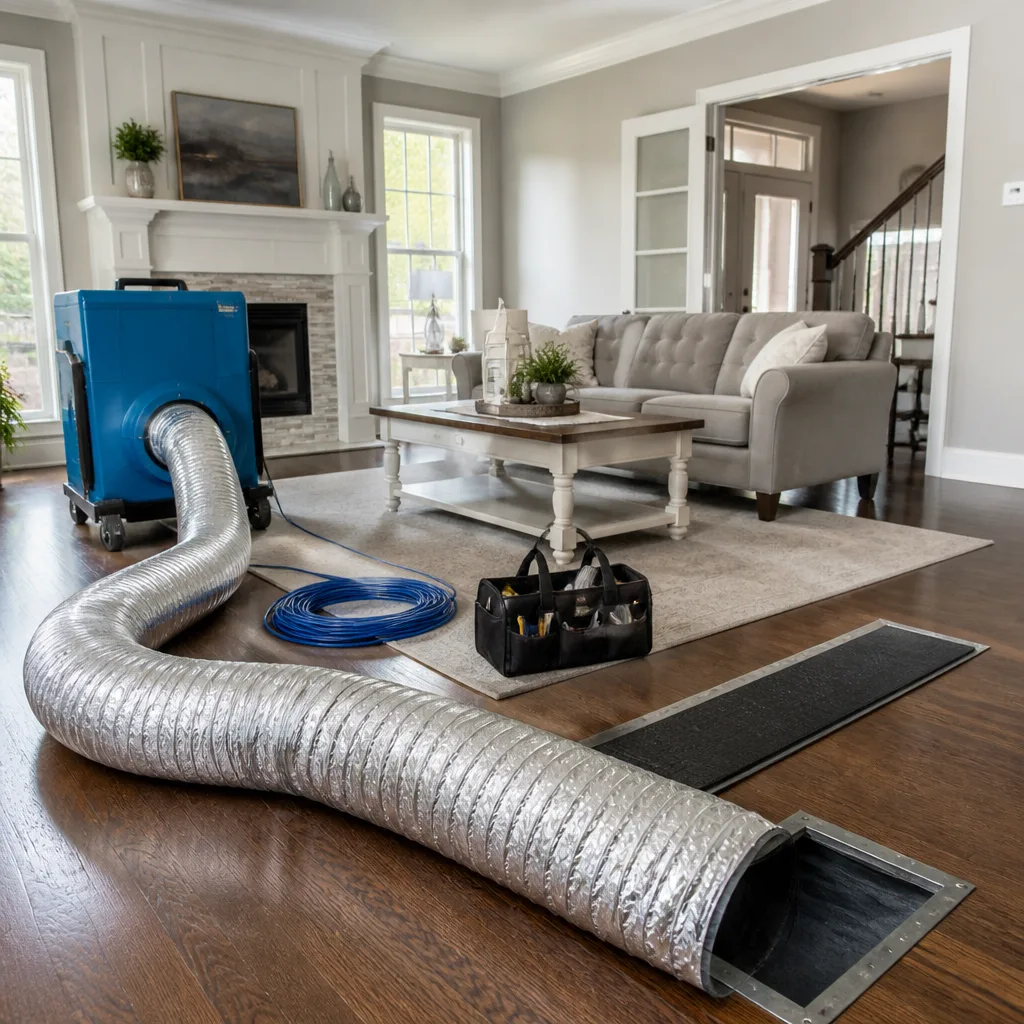 Whole-home duct cleaning
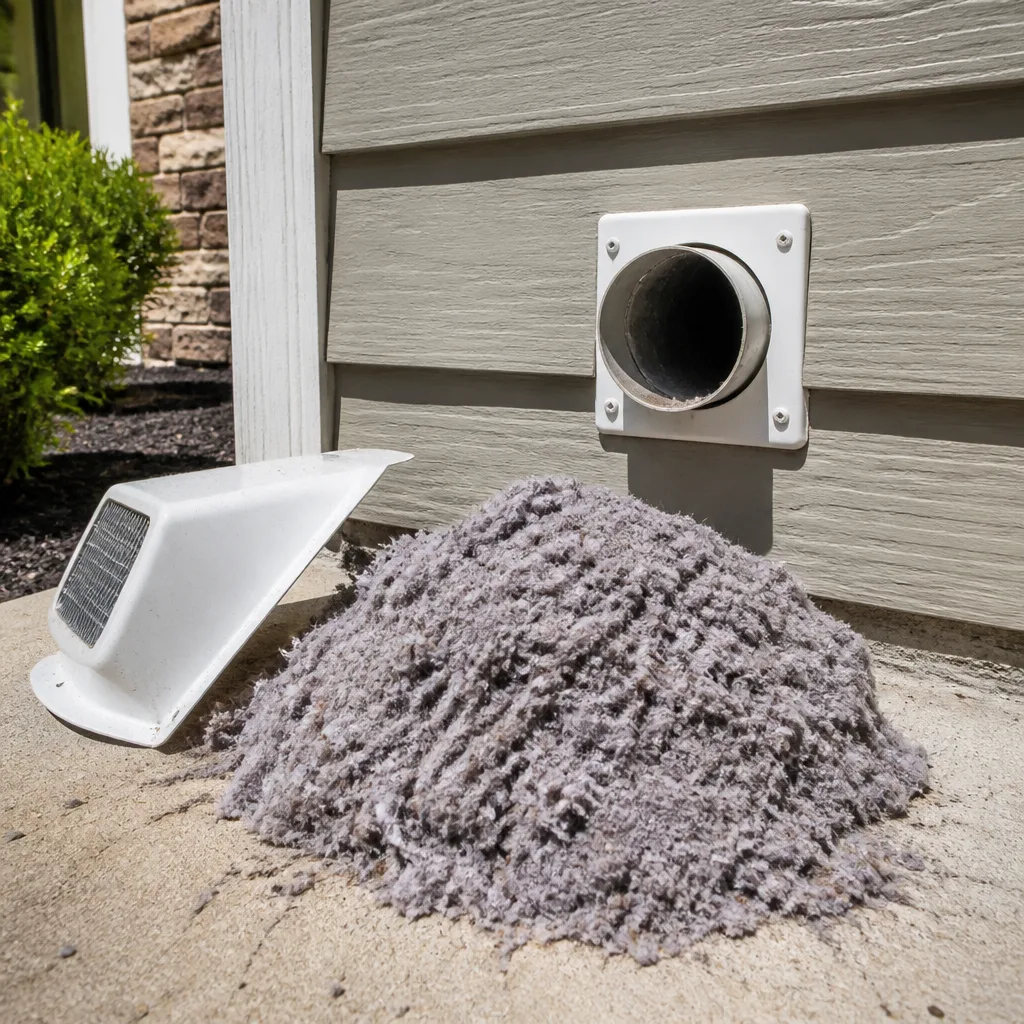 Dryer vent cleaning
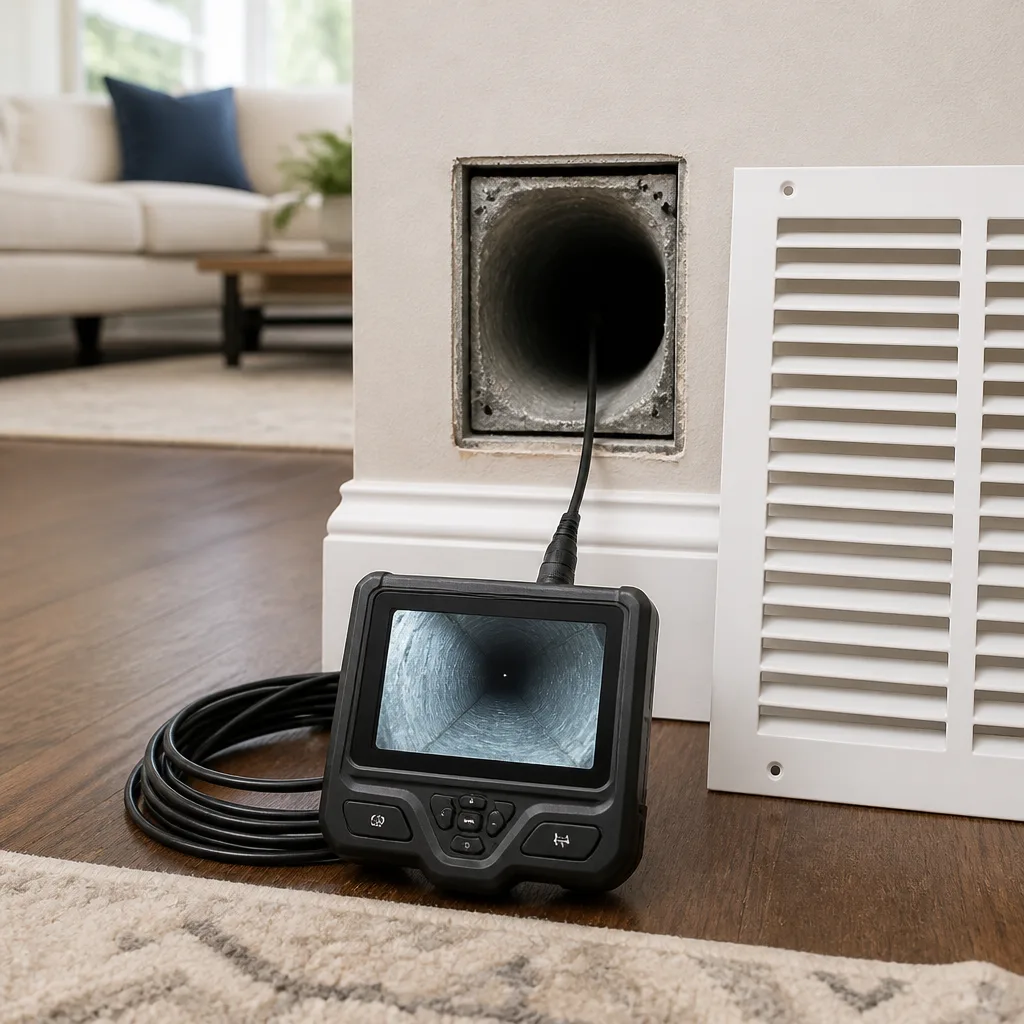 Camera inspection
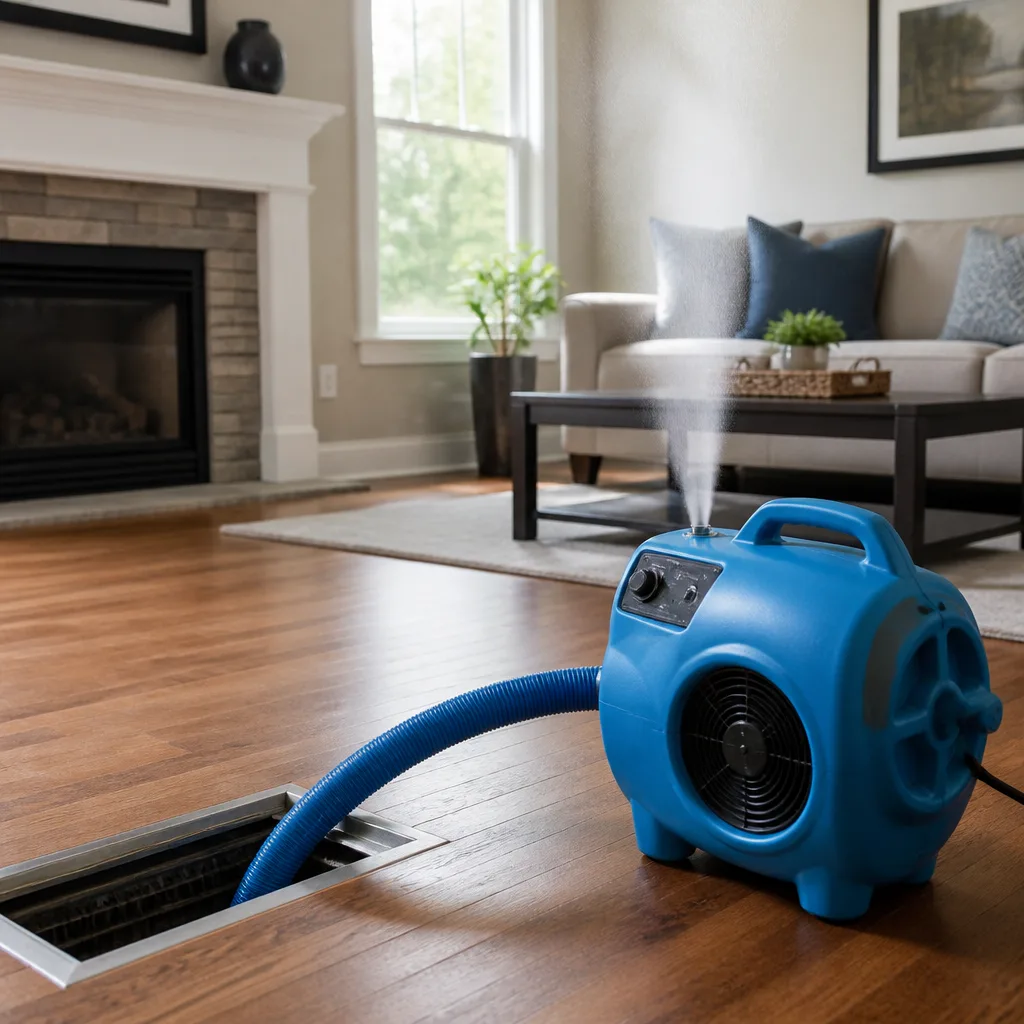 Sanitizing & deodorizing
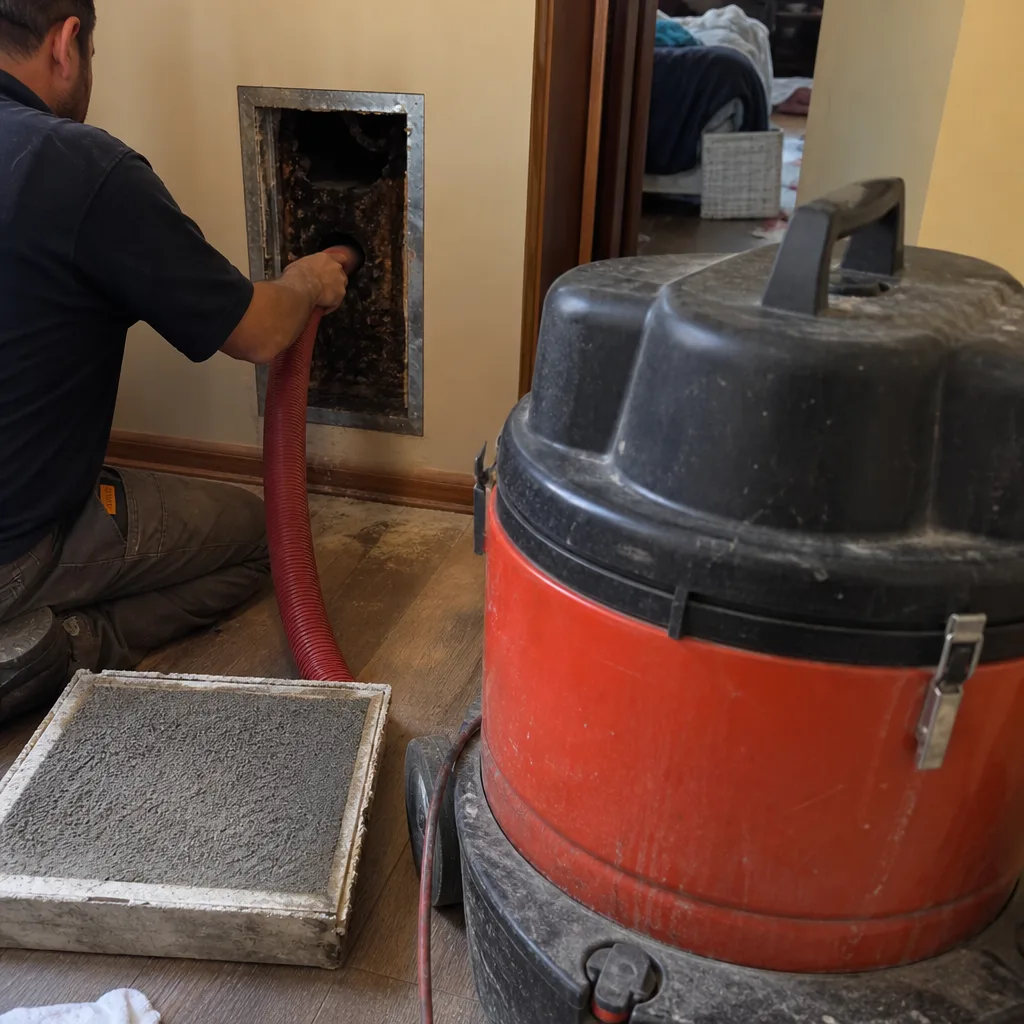
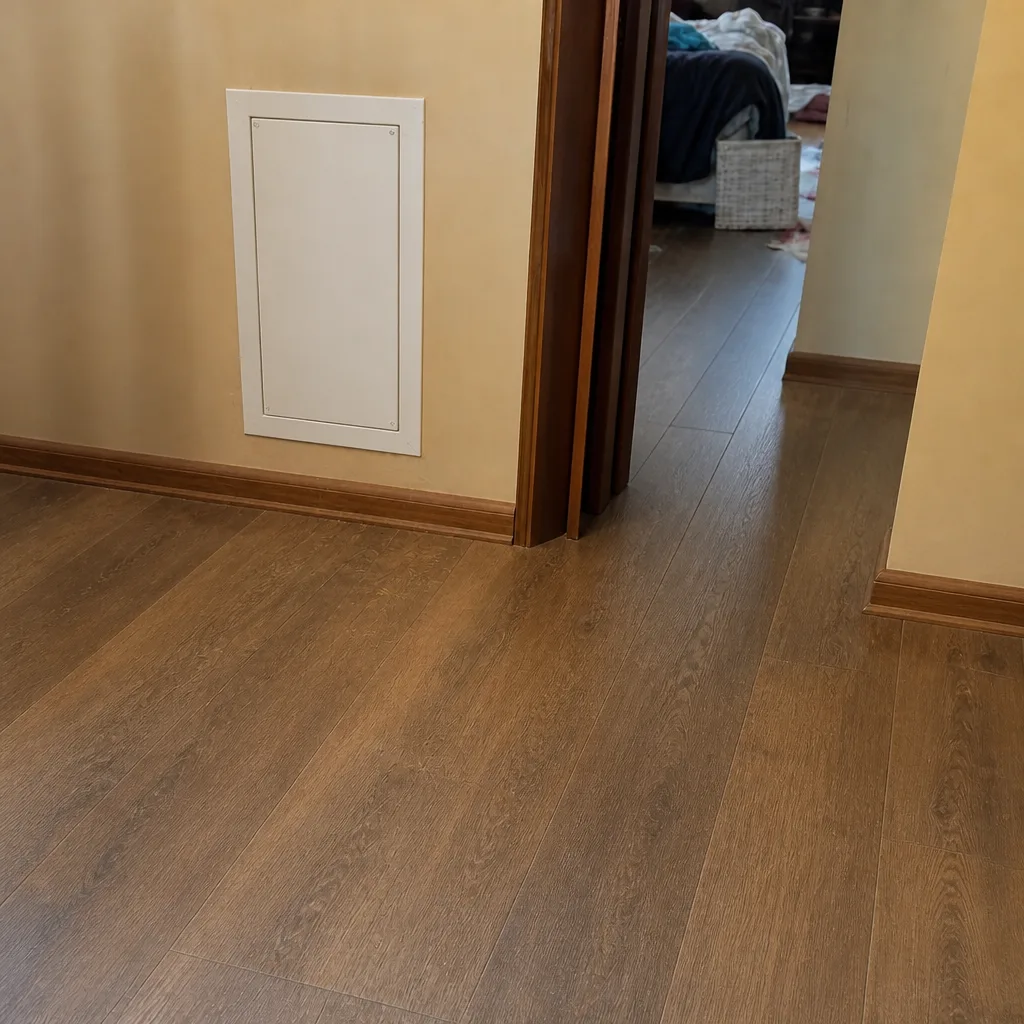
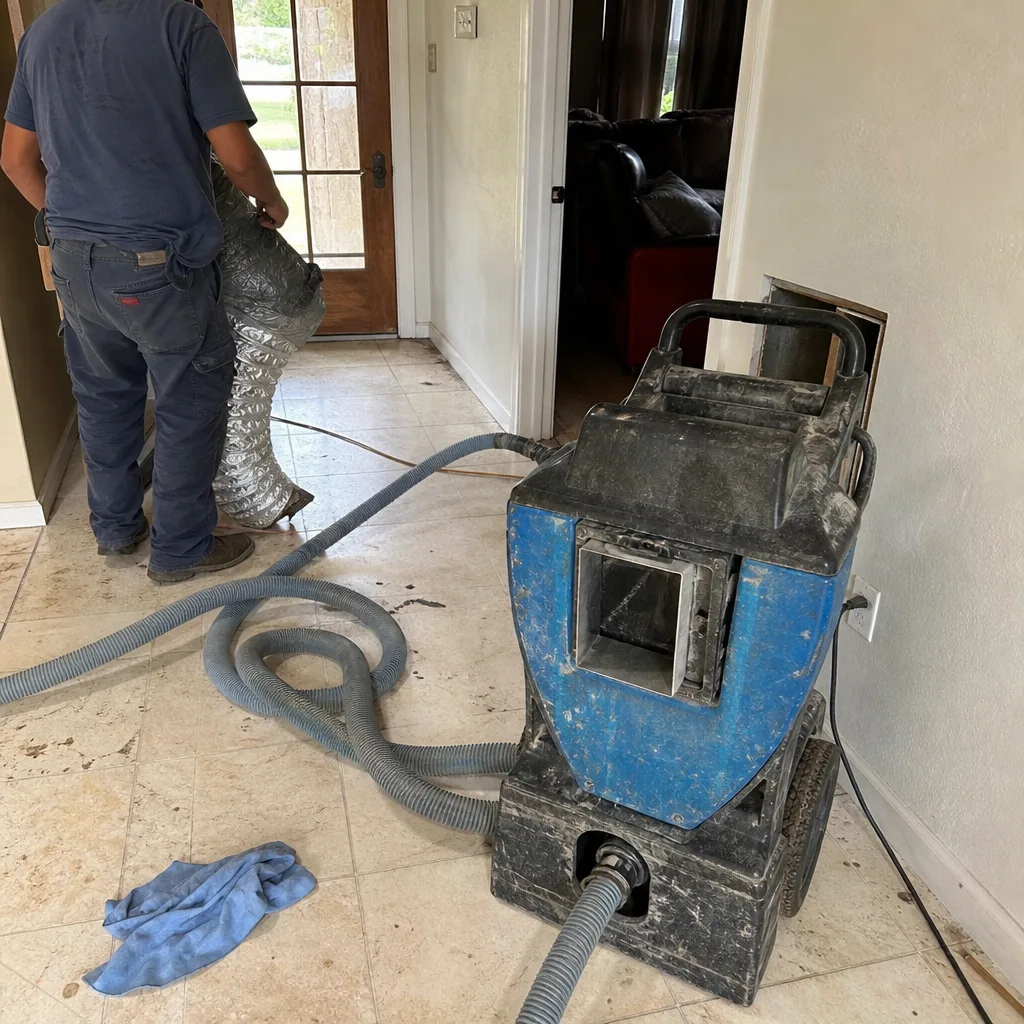
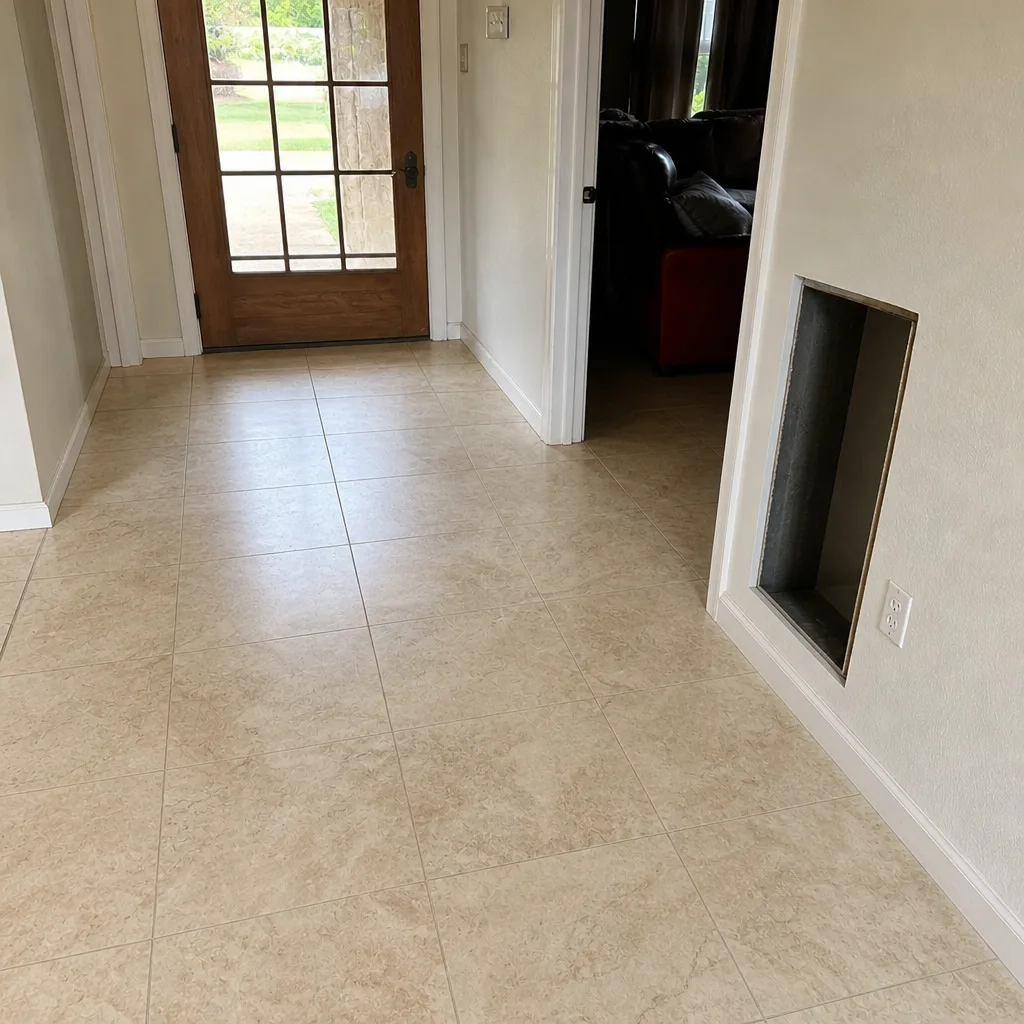
Whole-system duct and dryer vent check with before-and-after photos - you see exactly what came out of your vents
That "$99 whole-house special" is a bait ad - the real number appears once they are in your hallway, or the "clean" is a shop-vac at the register. We photograph the inside of your ducts before and after instead.
The Complete Guide to Air Duct Cleaning in Pleasant Grove
Most homeowners who’ve had their ducts “cleaned” have actually only had the main trunk lines vacuumed. The branch runs, the registers, and the air handler cabinet were never touched, which means roughly 60% of the system was left as-is and quietly blowing the same debris back into the living space. If you’ve paid for duct cleaning and can’t point to a single before-and-after photo or airflow reading, this guide is for you. We’ll walk through what a full-system clean actually involves in Pleasant Grove, why the equipment matters more than the price, and how to verify the work was done before you pay.
Quick Answer
Air duct cleaning in Pleasant Grove is a full-system process, not a single vacuum pass over the main trunk. It removes settled dust, construction debris, and clay-dirt infiltration from the supply and return runs, the registers, and the air handler cabinet using negative-pressure equipment and rotary brushes. A complete job also inspects the blower and coil housing, because cleaning ducts without addressing those components leaves the source of the contamination in place.
Styles & brands we work with
- Whole-home duct cleaning
- Dryer vent cleaning
- Camera inspection
- Sanitizing & deodorizing
Table of Contents
- Why Pleasant Grove Homes Have Specific Duct Problems
- Blow-and-Go vs. Source-Removal Cleaning: What’s the Difference?
- What a Full-System Clean Actually Covers
- The Equipment That Separates a Real Clean from a Cheap One
- The Air Handler Cabinet and Coil: The Part Everyone Skips
- How to Verify the Work Was Actually Done
- When Sanitizing Is Warranted and When It’s an Upsell
- How Often Do Pleasant Grove Ducts Actually Need Cleaning?
- What Air Duct Cleaning Costs in Pleasant Grove
Why Pleasant Grove Homes Have Specific Duct Problems
Pleasant Grove sits in the Dallas area, and that geography shapes your ductwork in ways most generic guides ignore. The clay-heavy soil this region is built on expands and contracts with wet and dry cycles, and over time that movement affects slab-on-grade foundations, which is the dominant housing pattern in the area. When a home shifts, the duct connections at the floor registers can open up, letting fine red clay dust and exterior air find its way into the supply runs.
Housing age matters here too. Most Pleasant Grove neighborhoods were built roughly between the 1980s and the 2000s, which puts a lot of homes in the sweet spot for flex duct that’s now sagging, kinked, or coming loose from its collars. Flex duct is convenient when it’s new, but a run that’s sagged or pinched collects dust at the low point and starves the room it serves. You’ll feel that more on the hottest Dallas summer days, when the system is running its longest and the airflow demand is highest.
Two other local factors show up on almost every job in Pleasant Grove:
- Construction dust from original builds. New construction pushes drywall dust, sawdust, and insulation fibers into a duct system before the first homeowner ever turns on the AC. On homes that were barely lived in during the build, that debris is still sitting in the branch runs decades later.
- Pollen and fine particulate load. North Texas springs push a heavy pollen load into the return side, which then settles inside the plenum and trunk. A filter catches some of it. The rest winds up coating the duct interior.
The right equipment and the right sequence of steps depend on which of these problems your system actually has. That’s why we inspect before we quote. Call (855) 658-5117 for a free estimate and we’ll show you what we find before we start.
Blow-and-Go vs. Source-Removal Cleaning: What’s the Difference?
The phrase “source-removal cleaning” gets thrown around a lot, so let’s make it concrete. Source-removal cleaning means removing the contamination from where it originates: the duct walls, the register boots, the air handler cabinet, and the return plenum. “Blow-and-go” means the technician uses a shop vac or a portable vac at the main trunk, spends 45 minutes on the home, and calls it done. The blower pushes loose dust into the living space during the visit, everything gets wiped down, and the system looks clean from the register while the branch runs are untouched.
Here’s how to spot the difference before you hire:
- Ask what equipment they use and whether it creates negative pressure. Source-removal cleaning requires a negative-air machine hooked to the main trunk so the entire duct system runs at below-atmospheric pressure while brushes agitate the walls. Without negative pressure, loosened debris goes back into the home.
- Ask if every supply and return run gets brushed, not just the trunk. A real cleaning reaches each branch line and each register boot, which is often where the most debris sits.
- Ask about the air handler. If the blower wheel and cabinet aren’t in scope, the cleaning is partial by definition.
- Ask for before-and-after photos of your own ducts. Not stock photos, not a portfolio. Your ducts, from the access points they cut.
- Ask how long the job will take. A whole-home source-removal job on a typical Pleasant Grove house runs several hours. A single-vac pass takes far less, and there’s a reason for that.
If the only number a company can discuss is a per-vent price, that’s usually blow-and-go pricing dressed up. Real air duct cleaning is priced per system, per job, on a written estimate after inspection.
What a Full-System Clean Actually Covers
A full-system clean addresses every part of the indoor air path. On a typical Pleasant Grove home, that means the supply trunk, all branch lines, every register boot, the return plenum, the return grille, and the air handler cabinet. Skipping any one of those leaves a source of contamination behind.
Here’s the sequence our technicians follow, so you know what to expect if you book a job:
- Inspection and walkthrough. We look at the system layout, note the number of runs, check the air handler access, and photograph problem areas before anything is moved.
- Setup and protection. Floor protection goes down. Access points are cut where needed, and the negative-air unit hooks to the trunk. This keeps the home clean while the work is happening.
- Agitation. Rotary brush systems run through each branch and trunk to break dust, clay particles, and construction debris off the duct walls. This is the step that separates a real clean from a vacuum pass.
- Extraction. The negative-air unit pulls the loosened debris into a HEPA-filtered collection chamber. This is where the equipment matters more than any other step.
- Register and boot cleaning. Every register cover comes off, gets cleaned, and the boot interior is brushed and vacuumed.
- Air handler cabinet and blower. The blower wheel and cabinet interior get cleaned as part of the job, not as an add-on. Coil condition is inspected and noted.
- Sanitizing where warranted. An EPA-registered antimicrobial fog is applied to the duct interior only when inspection shows the conditions that justify it.
- Verification. Airflow readings before and after, plus photos of the cleaned duct interior. We walk you through what changed.
- Sealing access points and any compromised connections. Cuts get sealed properly, and any loosened joints or sagging runs get flagged for repair.
If your dryer vents with the AC ducts, we handle that in the same visit through dryer vent cleaning, which is one of the most overlooked fire-safety services in a home. A lint-clogged dryer vent is a real fire risk, and it’s a service most pure duct-cleaning operators treat as an afterthought.
The Equipment That Separates a Real Clean from a Cheap One
You can’t clean a duct system with the wrong tools, no matter how careful the technician is. The equipment list is the most honest signal of what kind of job you’re getting, so ask about it before you book.
The systems we use are the same platforms specified for commercial and remediation work, applied to residential homes in Pleasant Grove:
- Rotobrush rotary brush systems. These run flexible brush heads through each duct run to agitate the walls. The rotary action reaches corners and elbows that a straight vacuum hose can’t touch.
- Nikro HVAC cleaning units. Powerful negative-pressure extraction that pulls the agitated debris out of the system and traps it. Nikro units are a recognized professional platform, not a residential shop vac with a longer hose.
- Abatement Technologies negative-air machines. The same HEPA-filtration equipment specified on commercial remediation projects, which keeps the workspace and the duct system under negative pressure throughout the job.
Here’s why it matters to you: without negative pressure, the brush agitation step clouds your home with the very dust it’s supposed to remove. On a Pleasant Grove home with fine red clay infiltration, that means a visible haze settling on furniture for days. With negative pressure and HEPA extraction, the debris goes into the collection unit, not onto your floors.
Equipment also opens up the ability to fix problems cleaning alone can’t solve. If inspection shows sagging flex runs, disconnected collars, or unsealed plenum joints, our duct repair and sealing work addresses the root cause of air loss and contamination re-entry. Clean ducts are the start. Sealed, sanitized ducts are the finish. Call (855) 658-5117 to set up an inspection, and we’ll tell you honestly which of these services your system actually needs.
The Air Handler Cabinet and Coil: The Part Everyone Skips
If duct cleaning is the head of the operation, the air handler is the heart. The air handler cabinet houses the blower wheel that moves every cubic foot of air through your home, and the evaporator coil that cools it. If the cabinet is full of dust and the blower wheel is caked, the entire duct system is being fed from a dirty source. Cleaning downstream of that source accomplishes far less than you paid for.
The blower wheel is the part most often overlooked. Its fins are designed to fling air outward at a specific blade angle, and a uniform coating of dust throws the balance off. You can’t see it from the filter slot. You have to pull the access panel and look. When we inspect a Pleasant Grove home and find the wheel coated, we tell you plainly:
- The duct system will recontaminate faster if the blower stays dirty.
- Airflow and efficiency suffer while the wheel is out of balance.
- Cleaning the cabinet and blower is worth doing as part of the same visit, not months later.
Coil inspection is a similar story. A coil caked with dust loses its ability to transfer heat, and on a Dallas-area summer where the system runs hard for months, that shows up as longer run times and higher bills. We don’t repair HVAC equipment, but we do clean the air handler components, and we flag coil condition so you know whether a licensed HVAC contractor should take a look.
Our HVAC cleaning service exists precisely because the air handler is part of the air system. Treating ducts and cabinet as separate jobs is how partial cleanings happen.
How to Verify the Work Was Actually Done
This is the fear that keeps people up at night after they write the check: did the technician actually clean the ducts, or did he run a vacuum for 30 minutes and leave? The good news is that verification is simple if you insist on it up front.
Here’s what to ask for and check:
- Before-and-after photos of your own ducts. A technician with a flexible camera can photograph inside the trunk and each branch run at the start and end of the job. Look for visibly lighter duct walls and no settled debris in the before-and-after.
- Airflow readings. A simple handheld meter at each supply register gives a before-and-after number. A real clean typically improves airflow at registers that were partially restricted. You should see the numbers, not just be told they improved.
- Visual check at the registers. The register cover should be clean on the interior face and the boot interior should show no debris after the job. If there’s a crust of dust under the grille, the boot wasn’t cleaned.
- Access point sealing. Any cut access points should be properly sealed, not left open or covered with tape that will peel off in a month.
- The air handler panel. The cabinet interior should be visibly cleaner than it was. Ask to see it before final payment.
If a technician can’t produce any of this, the work wasn’t verified, and you’re entitled to ask why. That’s one reason we don’t quote blind. Call (855) 658-5117 and we’ll walk you through what the inspection shows before you commit to anything.
When Sanitizing Is Warranted and When It’s an Upsell
Sanitizing is a genuine part of a full clean, but it’s not automatic. The question is whether the duct system shows evidence that warrants an EPA-registered antimicrobial fog, or whether the ducts just need debris removed.
Sanitizing is typically warranted when:
- There’s visible microbial growth on the duct interior, on the coil, or in the air handler cabinet during inspection.
- The home has had water intrusion or a moisture event, so the duct surfaces have been damp.
- A previous clean was inadequate and the ducts have been recontaminated by a dirty air handler.
- There’s a persistent musty odor coming from the supply registers, not just dust.
Sanitizing is usually not needed when the system shows dry dust and clay particles with no odor and no visible growth. A good source-removal clean takes care of that. If a company is pitching sanitizing on every job regardless of what the inspection finds, that’s an upsell.
Our air quality and sanitizing work goes beyond just fogging the ducts. We’re familiar with the Honeywell and Aprilaire product lines, which means we can recommend and service whole-home filtration and humidity solutions when the deeper issue is filtration or moisture balance rather than duct condition. Better air isn’t a feeling. It’s a result you can measure, and it starts with addressing the right component.
How Often Do Pleasant Grove Ducts Actually Need Cleaning?
There’s no universal interval that fits every home, but most Pleasant Grove homeowners fall into one of three buckets based on the specifics of their house.
- Every 3 to 5 years for a home that hasn’t been cleaned since construction or a major remodel, or that has pets and heavy seasonal pollen exposure.
- Every 5 to 7 years for a home with consistent filter changes, no pets, and no recent renovation work.
- Sooner, as needed for homes with visible dust at the registers, a recent HVAC service call that flagged airflow issues, or a new home purchase where the cleaning history is unknown.
Two Pleasant Grove-specific signals are worth watching. First, if you’re seeing a fine orange-red dust accumulating at register edges, that’s often clay infiltration through a foundation crack or a loosened boot, which warrants a look at the duct repair and sealing side. Second, if the home was built in the 1980s or 1990s and has never had the ducts cleaned, there’s a good chance original construction debris is still sitting in the branch runs. Filter changes won’t reach it.
An inspection tells you which bucket you’re in. It doesn’t cost anything, and it takes less than an hour. Call (855) 658-5117 to book one.
What Air Duct Cleaning Costs in Pleasant Grove
Pricing for a full-system duct clean depends on the number of runs, the condition of the system, and whether repair or sanitizing is in scope. The estimate is per job, from a written quote, not from a per-vent price or a teaser coupon. A per-vent price almost always translates into a low headline number that turns into a much larger invoice once the technician is inside and starts adding line items.
Here’s how the picture typically breaks down:
| Service | Estimated Range |
|---|---|
| Full-system air duct cleaning (supply, return, registers, boots, air handler cabinet) | Typical range for a Pleasant Grove home, quoted per system after inspection |
| Dryer vent cleaning (added to the same visit) | Quoted separately, per vent, on the same written estimate |
| Duct repair and sealing (when inspection shows compromised runs or disconnected joints) | Quoted per the scope of repair needed |
| Sanitizing with EPA-registered antimicrobial (when warranted) | Quoted as a line item when inspection supports it |
We don’t publish flat prices because a three-bedroom slab-on-grade home with 12 runs is a different job from a two-story with 18 runs and a sagging return. What we do commit to is one flat price per system, agreed before any work starts, so there’s no surprise on the invoice. Before-and-after photos of your ducts go with the job at no extra cost.
Why are some quotes so much cheaper? Because they’re usually a single-vac pass on the main trunk with no negative pressure, no branch cleaning, and no air handler work. If the price looks like a third of what everyone else quoted, that’s about the fraction of the system you’re getting cleaned. If you want a written estimate on the full job, call (855) 658-5117. We answer 24/7. Fast dispatch from 7am to 7pm, Sunday through Friday.
Common Mistakes to Avoid
- Hiring on price alone. The lowest quote is usually the one with the narrowest scope. Ask what equipment they use, whether they clean the air handler, and whether they’ll show you photos of your own ducts before and after. A cheap vacuum pass isn’t a saving if the system has to be cleaned again next year.
- Accepting a per-vent price. Per-vent pricing almost always starts low and climbs once the technician is inside. A per-system flat price, agreed in writing before work starts, is the honest structure.
- Letting the technician skip the air handler cabinet. Dusty blower wheels and cabinet interiors recontaminate a clean duct system within months. The air handler is part of the air system, and skipping it defeats the purpose of the job.
- Accepting sanitizing without an inspection basis. A fog is warranted when the inspection finds growth, odor, or a moisture event. Pitching it on every job, regardless of condition, is an upsell.
- Signing off without verification. Ask for airflow readings and photos of your own duct interior before final payment. If the technician can’t produce them, you can’t confirm the work was done.
- Ignoring clay infiltration and foundation cracks. If you’re seeing red clay dust at register edges, a cleaning alone won’t stop it. The compromised boot or crack has to be sealed, or the same debris returns within a season.
- Forgetting the dryer vent. Dryer vent lint buildup is a real fire risk, and it’s easy to forget during a duct cleaning visit. Bundle it into the same appointment and you eliminate the risk in one trip.
See the difference
 Before
 After
 Before
 After
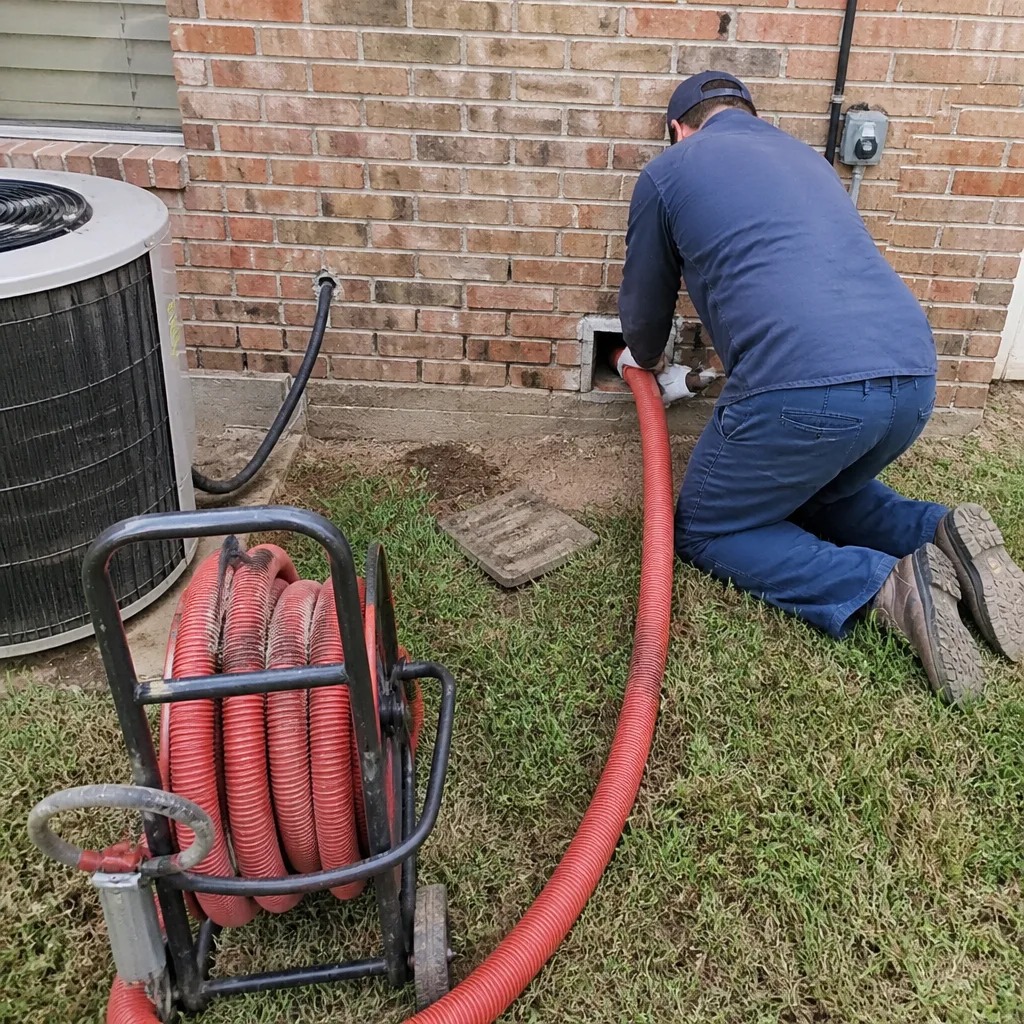 Before
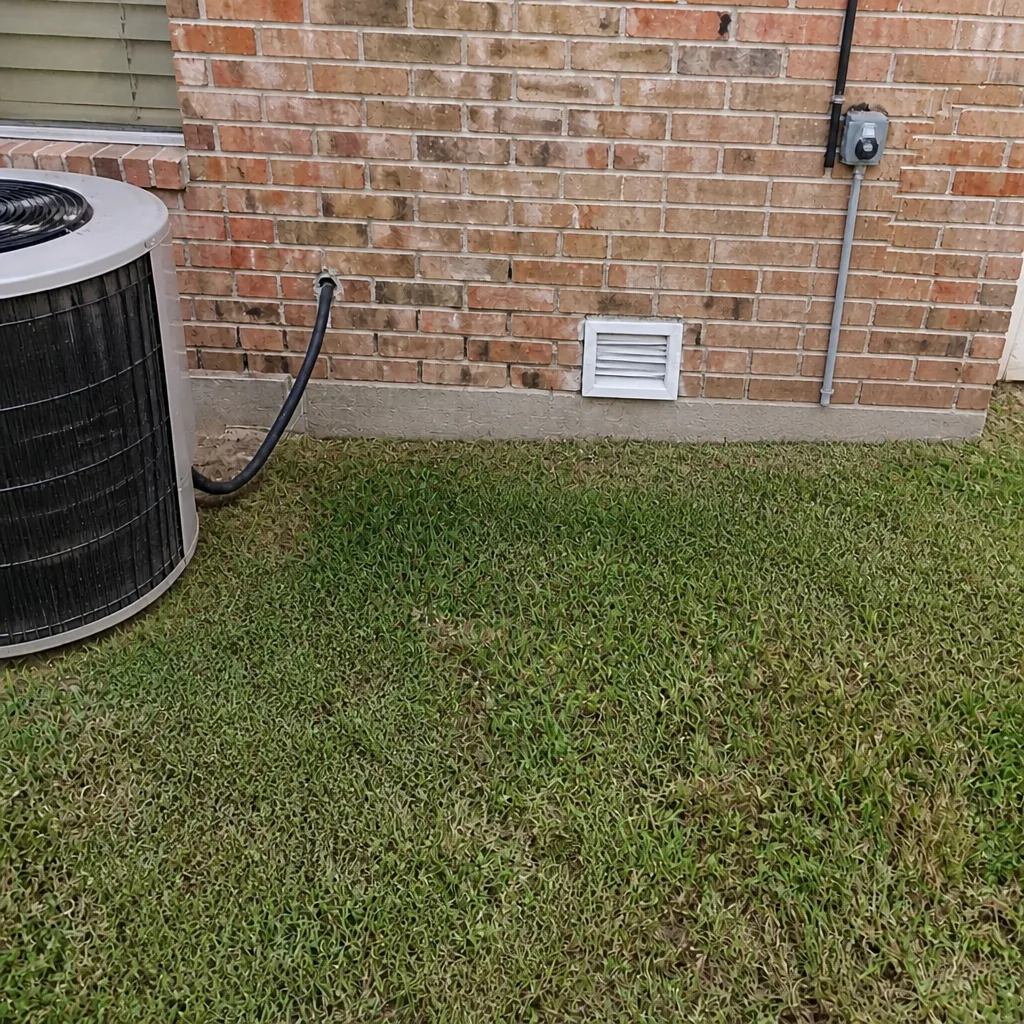 After
When to Call a Professional
Some signals are clear. If you’re seeing a visible dust film accumulate on surfaces within days of cleaning, if register edges show clay-colored debris, or if a musty odor carries through the supply vents, you’re past the point of guessing. A recent HVAC service call that flagged low airflow is another. So is a home purchase where the prior cleaning history is unknown, and a remodel that pushed drywall dust or construction debris into the return side. None of those situations benefit from a shop vac. They need negative pressure, rotary agitation, and an air handler inspection.
Pleasant Grove Air Duct Cleaning offers free estimates in Pleasant Grove. Call (855) 658-5117 and we’ll schedule an inspection, walk through what the system shows, and quote a flat price per system before any work starts.
Frequently Asked Questions
A full-system duct clean in Pleasant Grove is priced per job, from a written estimate taken after inspection, based on the number of runs and the system’s condition. There’s no per-vent pricing and no teaser coupon. Call (855) 658-5117 for an exact quote. Estimates are free.
Cheaper quotes usually cover a fraction of the system: a single vacuum pass on the main trunk, no negative pressure, no branch cleaning, and no air handler work. That’s about a third of the job at roughly a third of the price. Call (855) 658-5117 and we’ll quote the full job in writing so you can compare on equal scope.
Ask for before-and-after photos of your own duct interior, airflow readings at each register, and a visual check of the air handler cabinet before final payment. Those three items verify the work was performed. Call (855) 658-5117 and we’ll walk you through the verification on your own system.
Most Pleasant Grove homes need it every 3 to 7 years depending on pets, pollen exposure, recent renovations, and whether the ducts have ever been cleaned since the home was built. Visible dust at registers or a recent HVAC airflow complaint warrants an inspection sooner. Call (855) 658-5117 to schedule one.
No, in most cases you can stay. Negative-pressure equipment and HEPA filtration keep the work area contained during the job, which is one of the reasons we run Abatement Technologies machines instead of shop vacuums. Call (855) 658-5117 if you have specific concerns about the setup in your home.
It can, when the actual debris load in the duct system is a contributing source. Removing settled dust, clay particles, and construction debris from the supply and return runs reduces what gets circulated through the living space. If the air handler is also dirty, that’s cleaned in the same visit. Call (855) 658-5117 for an inspection to see whether cleaning is the right first step for your home.
The Bottom Line
A complete duct cleaning in Pleasant Grove comes down to four things: negative-pressure equipment that actually contains the debris, brushes that reach every branch run, an air handler cabinet that gets cleaned alongside the ducts, and verification you can see with your own eyes. Anything short of that is a partial cleaning sold at a partial price. The Pleasant Grove housing mix of 1980s through 2000s slab-on-grade homes, clay-heavy soil, and heavy pollen load makes the full-system approach especially important here. Clean ducts are the start. Sealed, sanitized, verified ducts are the finish. That’s the standard we hold ourselves to, and it’s the standard worth asking any duct cleaner about before you hire.
Ready to see what your system actually looks like inside? Call (855) 658-5117 for a free estimate. We answer 24/7. Fast dispatch from 7am to 7pm, Sunday through Friday. Visit Pleasant Grove Air Duct Cleaning to learn more about the five services we cover, from duct and dryer vent work to HVAC cleaning, air quality, and duct repair and sealing.
Written by the team at Pleasant Grove Air Duct Cleaning.