
Last updated November 23, 2026
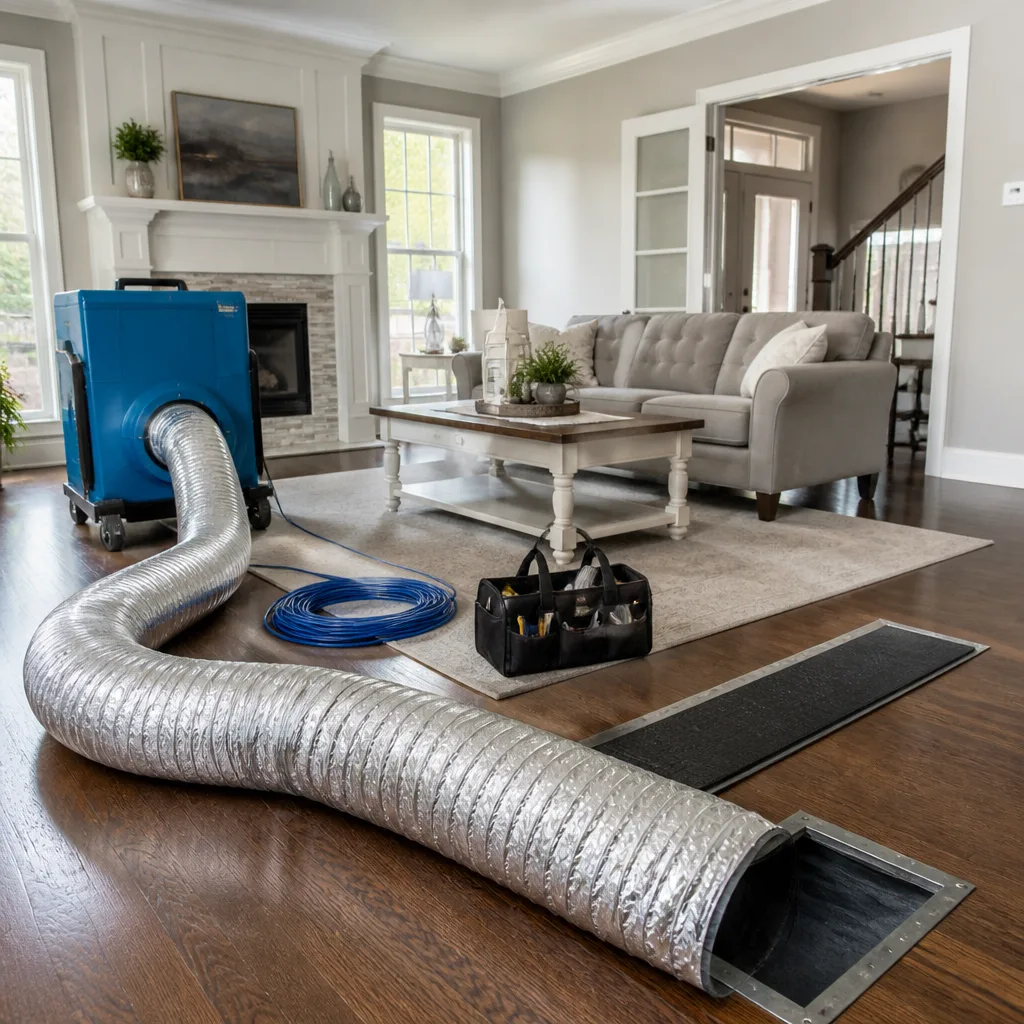 Whole-home duct cleaning
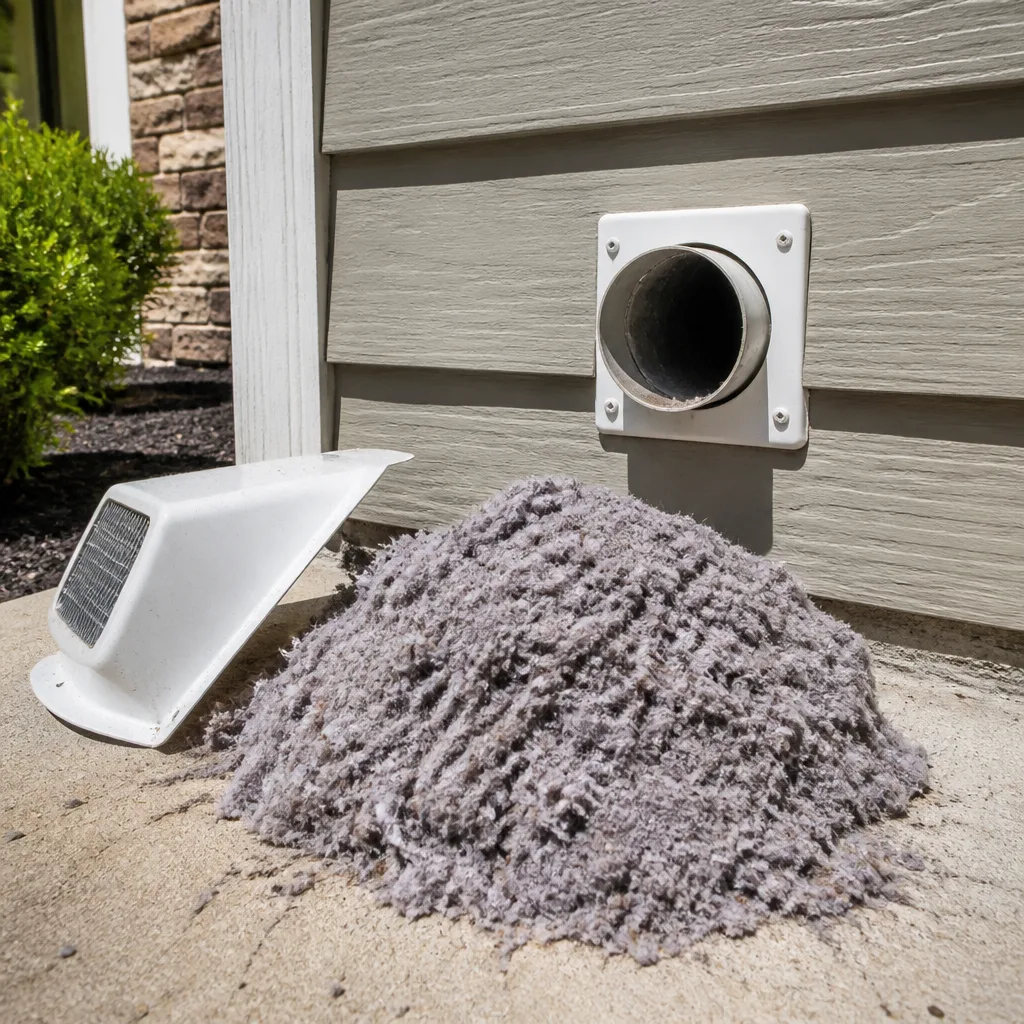 Dryer vent cleaning
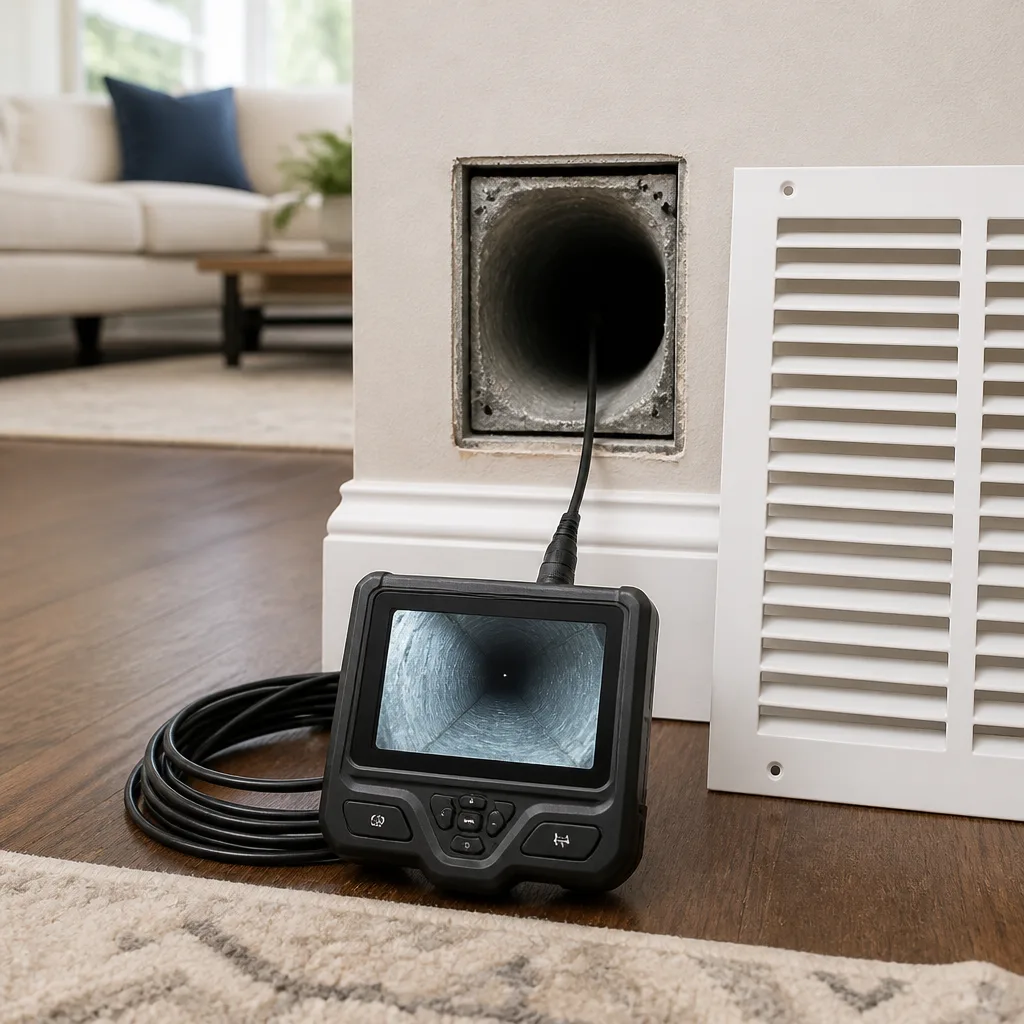 Camera inspection
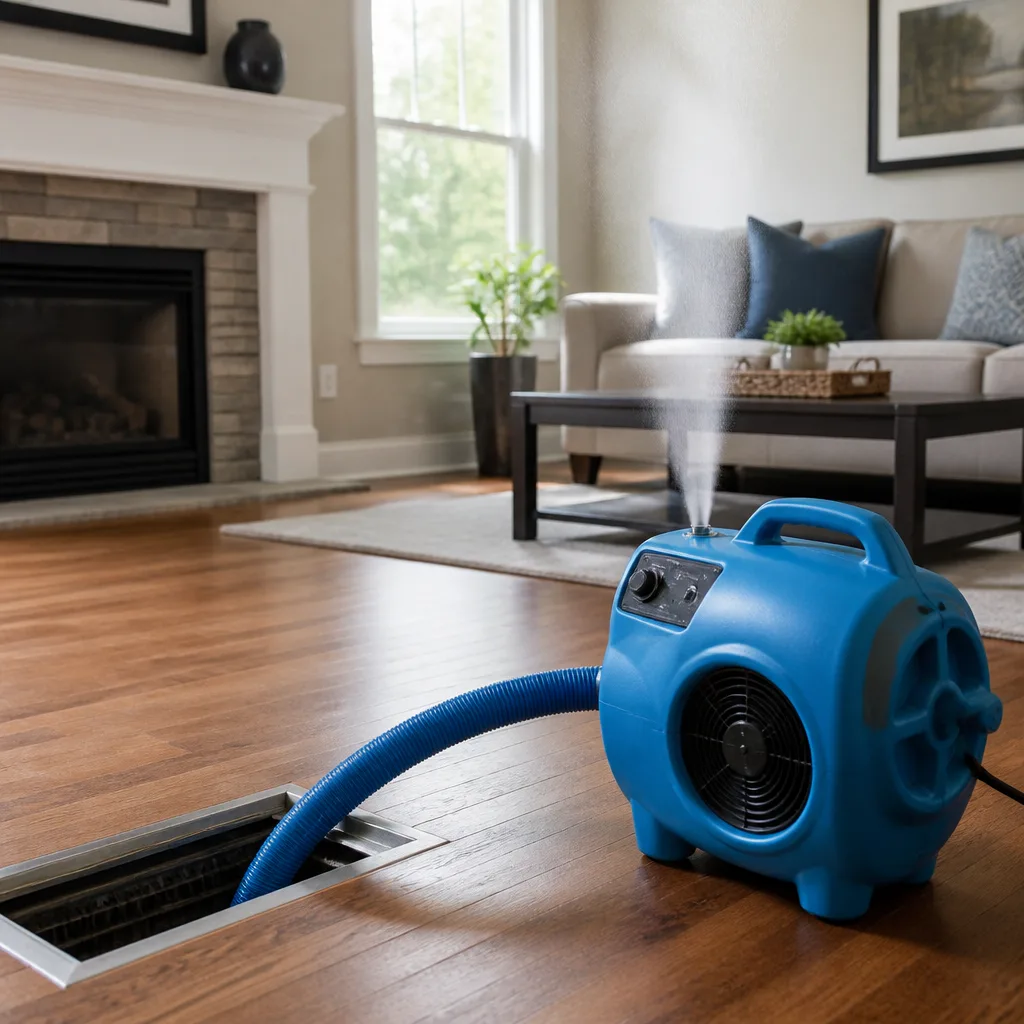 Sanitizing & deodorizing
Whole-system duct and dryer vent check with before-and-after photos - you see exactly what came out of your vents
That "$99 whole-house special" is a bait ad - the real number appears once they are in your hallway, or the "clean" is a shop-vac at the register. We photograph the inside of your ducts before and after instead.
Air Duct Cleaning Emergency Preparedness Guide for Pleasant Grove Homes
After a flood event, one of the most common remediation mistakes is running the HVAC system to “dry things out” before the duct system has been inspected. That single decision can distribute contaminated air to every room in a house within hours. We’ve walked into Pleasant Grove homes days after water came in, and the smell was already in the carpet, the curtains, the furniture – spread there by the very system the homeowner turned on to help. Contamination doesn’t stay where the event happened. Your ducts are a distribution network, and once the blower runs, whatever is inside them goes everywhere. What follows is the sequence we recommend for the events Pleasant Grove homeowners actually face: flooding from heavy rain, house fires, and the tornado and hail events that move through the Dallas area. You’ll learn what to shut off in the first 24 hours, how to tell whether ductwork took on water, why smoke behaves differently than water in a duct system, and how to document everything for an insurance claim.
Quick Answer
After a flood, fire, or major storm in Pleasant Grove, the correct order is: shut down the HVAC system, photograph and document everything for your insurer, then have the duct system inspected before anyone runs the air conditioning again. Contaminated ductwork reintroduces smoke, soot, floodwater pathogens, or mold spores into the living space every time the HVAC runs, so remediation that skips the ducts gets undone the moment the system comes back on. Cleaning, negative-pressure extraction, and antimicrobial treatment are professional work – not a shop-vac job.
Styles & brands we work with
- Whole-home duct cleaning
- Dryer vent cleaning
- Camera inspection
- Sanitizing & deodorizing
Table of Contents
- The First 24 Hours: HVAC Shutdown Protocol
- Post-Flood Duct Assessment: Drying vs. Replacing
- Post-Fire and Smoke: Why Duct Insulation Holds Odor
- Storm Debris and Tornado Damage: The Inspection Sequence
- Insurance Documentation for an HVAC Claim in Texas
- How to Know When Ducts Need Inspection vs. Cleaning
- Preparedness Before the Next Event
The First 24 Hours: HVAC Shutdown Protocol
In the first 24 hours after a flood, fire, or major storm event in Pleasant Grove, your HVAC system should be off and stay off until the ducts have been inspected. That includes the thermostat, the air handler, and any window units in affected rooms. It’s the single most important decision you’ll make, and it’s also the one homeowners most often get wrong, because the instinct to move air and dry things out is strong and reasonable-sounding.
Here’s the sequence we recommend, in order:
- Turn the system off at the thermostat. Set it to “off,” not “fan on.” Fan-only mode still moves air through the ducts and through the house.
- Cut power at the breaker if water reached the air handler, the furnace, or any electrical component. Standing water and energized equipment don’t mix, and this is a job for an electrician or your utility, not a homeowner.
- Photograph before you touch anything. Wide shots of each room, close-ups of water lines on walls, the air handler, visible duct runs, and any debris. Timestamp everything.
- Close supply registers in unaffected rooms to limit cross-contamination if the system is accidentally switched back on.
- Remove standing water and wet porous materials – carpet, padding, drywall – but leave the duct system alone.
- Call your insurer before you call a contractor. Coverage decisions often hinge on the order of documentation.
- Book a professional duct inspection before the system runs again.
One note specific to this part of Texas: after a storm, the outdoor humidity can sit in the 90s for days, and a house that lost power loses its dehumidification along with it. That makes the temptation to run the AC stronger. Resist it. Running a wet system pushes moisture and whatever else is in the ducts into every room.
Post-Flood Duct Assessment: Drying vs. Replacing
The difference between ductwork that can be dried and ductwork that has to be replaced comes down to material and saturation depth. Sheet metal ductwork that got wet but not submerged can often be cleaned, dried, and treated. Flex duct is a different story – its inner liner is porous, it traps moisture against the coil, and once water has run through it, it usually has to come out. That’s not a sales position; it’s how the material behaves.
When we assess ductwork in a Pleasant Grove home after flooding, we’re looking for four things:
- Visible water in the duct runs. Shine a light down the supply boots. Standing water or a waterline on the metal is a clear sign.
- Sagging flex duct. A flex run that has taken on water sags under the weight, and the low point holds moisture long after the rest dries.
- Discoloration and odor at the registers. A musty smell at the supply vents, or dark staining around the boot, suggests moisture has been sitting.
- Condensation inside the air handler cabinet. If the cabinet has water inside it, the ducts downstream are suspect.
Here’s where the “dry it out” instinct breaks down. Running the system won’t dry ductwork effectively – it moves air, but it doesn’t remove moisture from porous material, and it spreads whatever’s growing. Real drying means mechanical extraction, high-volume air movers, and dehumidification, followed by a professional assessment. If flex duct has to come out, the replacement is a chance to seal the system properly, which is a separate conversation about duct repair and sealing.
After the ducts are cleaned, dried, or replaced, sanitizing matters. Floodwater in this area carries soil, organic matter, and whatever else it picked up on the way in. A residual antimicrobial treatment applied to clean duct surfaces is the step that closes the loop.
Post-Fire and Smoke: Why Duct Insulation Holds Odor
Smoke doesn’t just pass through a duct system – it deposits. And the place it deposits most stubbornly is the duct insulation, both the internal liner of flex duct and the external wrap on metal runs. That’s why a fire-damaged home can smell clean for a week and then smell like smoke again the first hot afternoon – the insulation has been slowly releasing odor compounds the whole time, and the HVAC system distributes them.
What actually gets smoke smell out of a duct system is a sequence, not a single pass:
- Negative-pressure extraction. A sealed containment with a HEPA-filtered negative-air machine pulls air and particulate out of the system without pushing it into the living space. This is the same class of equipment specified in commercial and mold-remediation work – we use Abatement Technologies units for exactly this reason.
- Mechanical agitation of surfaces. Liner and metal both have to be brushed to release adhered soot. A rotary brush system like Rotobrush reaches surfaces a wand can’t.
- Antimicrobial and deodorizing treatment. After surfaces are clean, a residual treatment addresses the remaining odor compounds at the surface level.
- Verification. A final visual inspection and airflow check confirm the system is clean and pulling properly before the HVAC goes back online.
If the smoke smell returns days or weeks after a cleaning, one of two things happened. Either the cleaning didn’t reach the insulation (a surface pass isn’t enough), or there’s a contamination source outside the duct system – charred framing, smoke-saturated insulation in the walls, or contents that were never treated. A return of odor after cleaning is diagnostic information, not a reason to clean again and hope.
Storm Debris and Tornado Damage: The Inspection Sequence
Dallas-area tornado and hail events can compromise attic ductwork without leaving water inside the house. A displaced roof section, a shifted ridge vent, or blown-in insulation pushed out of place can open a gap in a duct run and let in debris, attic dust, and – in a real breach – outdoor air and rain. Hail alone rarely damages ducts directly, but it takes shingles with it, and that’s where the water gets in.
The inspection sequence for storm-exposed attic ductwork follows a fixed order. We don’t skip steps, and neither should you:
- Attic inspection. Look for displaced insulation, daylight through the roof deck, or wet spots on the sheathing above duct runs.
- Duct integrity check. Walk each run looking for separated joints, crushed or kinked flex, or sections that have pulled loose from their boots.
- Insulation assessment. Wet attic insulation above a duct run is a slow-release moisture source. It needs to be removed and the duct inspected directly.
- Airflow verification. Weak airflow at registers on one side of the house, while the other side is normal, often points to a disconnected or crushed run in the attic.
- Sealing and repair. Breaches are sealed, disconnected runs are reconnected, and crushed sections are replaced before the system goes back into normal service.
This is the piece most homeowners miss after a storm. The house looks fine – no water in the living room, no visible damage. But an attic duct run pulled apart by wind-driven debris or a shifted roof panel will just quietly pull attic air into the living space for months. Clean ducts are the start – sealed, sanitized ducts are the finish, and storm events are exactly when sealing matters most.
Insurance Documentation for an HVAC Claim in Texas
A Texas homeowner’s claim for HVAC-related damage after a covered event lives or dies on documentation gathered in the first few days. Insurers need to see the condition of the system and the ductwork before any remediation started, and once cleaning begins, that evidence is gone. This is one of the reasons we tell Pleasant Grove homeowners to photograph before they call anyone.
What to gather:
- Dated photographs of the air handler, visible duct runs, registers, and any waterlines or soot deposits. Wide and close-up.
- A written timeline of the event, the date and time the system was shut off, and when water was discovered.
- Airflow readings from a professional inspection. Static-pressure and airflow measurements taken before cleaning document system condition in a way photos can’t.
- A contractor report describing what was found, what should be replaced rather than cleaned, and why. Flex duct versus metal, contaminated insulation, and disconnected runs all belong in this report.
- Receipts and invoices from any emergency mitigation work done before the duct assessment.
Two practical notes. First, ask the contractor to write the report in plain language – insurers process narrative reports much faster than technical checklists. Second, keep the photos and report together even after the claim closes; if mold shows up months later, you’ll want the original documentation. And note that our scope is the duct system, HVAC cleaning, and air quality work – if a claim involves structural repairs or mold remediation beyond the ducts, those are handled by specialists in those trades, and your insurer will want their reports alongside ours. We’re glad to work with your insurer and provide the duct-side documentation; we just can’t speak for coverage decisions.
How to Know When Ducts Need Inspection vs. Cleaning
An inspection is diagnostic; a cleaning is the fix. Knowing which one you need after an event saves you money and, more importantly, makes sure nothing gets missed. A post-event inspection always comes first – always. A cleaning without an inspection is a guess.
Book an inspection after any of these:
- Water entered the home above the level of the supply registers, or reached the air handler.
- The house had a fire, even a small one confined to one room, or heavy smoke traveled through the return system.
- A roof section, vent, or exterior wall was breached by storm debris.
- The system ran for any length of time while the house was wet or smoky.
Book a cleaning when:
- An inspection confirms contamination but the ductwork is structurally sound.
- Flex duct has been replaced and the remaining metal runs need to be cleaned before reassembly.
- Post-fire surfaces have been assessed and are clean enough to treat rather than replace.
- The dryer vent – a separate but genuinely important line – is clogged or was affected by the event. Lint buildup is a leading cause of residential house fires, and post-event is a sensible time to address it. dryer vent cleaning is part of the same visit for many of our customers.
One house-specific factor: homes in Pleasant Grove range from older construction with original sheet metal work to newer builds with long flex runs in the attic. Older metal ducts often survive water events better than flex, but their joints are looser and their sealing is poorer. Newer flex systems clean up beautifully – until they get wet. Knowing which type you have before an event matters, and a quick inspection in a quiet season is the easiest way to find out.
Preparedness Before the Next Event
The best time to think about your duct system is before you need to. A few concrete steps today make the next event much easier to handle.
- Know where your HVAC breaker is and label it. In the middle of a wet event, nobody wants to be hunting through the panel.
- Photograph your duct system now. Attic runs, air handler, registers, and the labels on your equipment. Store the photos off-site or in the cloud.
- Check your duct sealing. Loose joints and disconnected runs are common, and they let contamination in faster when something goes wrong.
- Schedule a routine cleaning. A system that’s already clean at the start of the event takes on less contamination and cleans up faster afterward.
- Consider filtration. A proper whole-home filter – we install and service Honeywell and Aprilaire lines – gives you one more layer of defense and is far easier to service than a filter you didn’t choose.
- Write down your insurer’s claim number and contact before you need it.
One call covers your ducts, your dryer vent, your HVAC, and your air quality. That breadth matters after a serious event, because tracking down three separate contractors while a house is drying out is a lot of coordination to manage on a bad week. Our technicians have up to 8 years of experience, and we use contractor-grade equipment – Rotobrush rotary brush systems, Nikro HVAC cleaning units, and Abatement Technologies negative-air machines – that reaches past surface cleaning into the parts of the system that hold onto contamination. We show you what we find before we start, and better air isn’t a feeling – it’s a result you can measure.
Common Mistakes to Avoid
- Running the HVAC to “dry things out.” This is the big one. Turning the system on before the ducts are inspected pushes moisture and contamination into every room. On a humid Dallas-area week it can make a wet house worse, not better.
- Using a shop vac on ductwork. A shop vac can’t reach past the first few feet of a run, and it stirs up the contamination it doesn’t capture. It also can’t get into flex duct liner, which is exactly where the problem hides.
- Cleaning before documenting. If a claim is in your future, photos and an inspection report gathered before cleaning are hard evidence. Once the ducts are cleaned, that evidence is gone.
- Assuming “no water in the house” means no duct damage. Storm events can breach attic ductwork without any visible water indoors. If the roof was hit, the attic needs a look.
- Treating smoke smell as a surface issue. Wiping down registers and running an air purifier won’t fix smoke embedded in duct liner. If the smell returns after a cleaning, the cleaning didn’t reach the right place.
- Ignoring the dryer vent during a post-event visit. While the technicians are already on-site, checking the dryer vent costs almost nothing and addresses a real fire risk. dryer vent cleaning is a dedicated service for that reason.
- Patching wet flex duct instead of replacing it. A repaired section of wet flex will hold moisture at the joint. The material is inexpensive to replace and the savings aren’t real.
See the difference
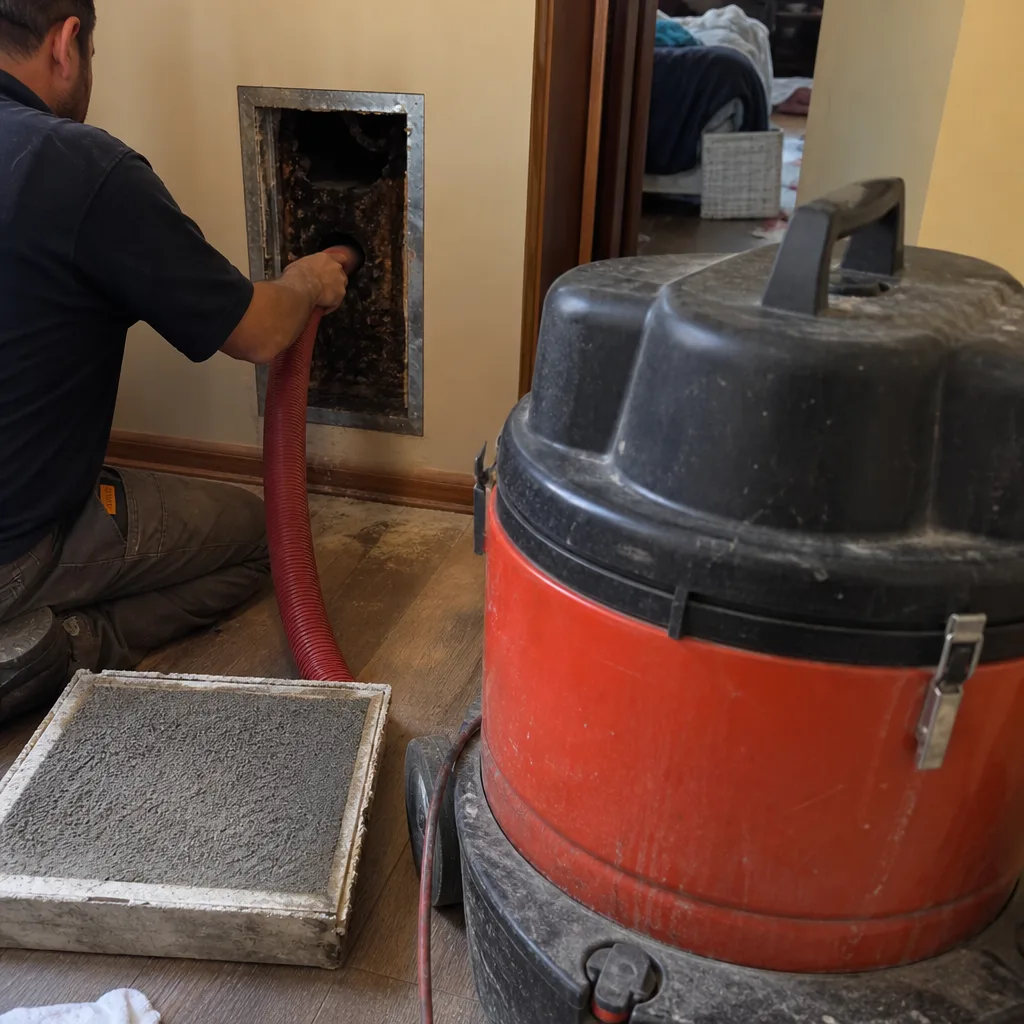 Before
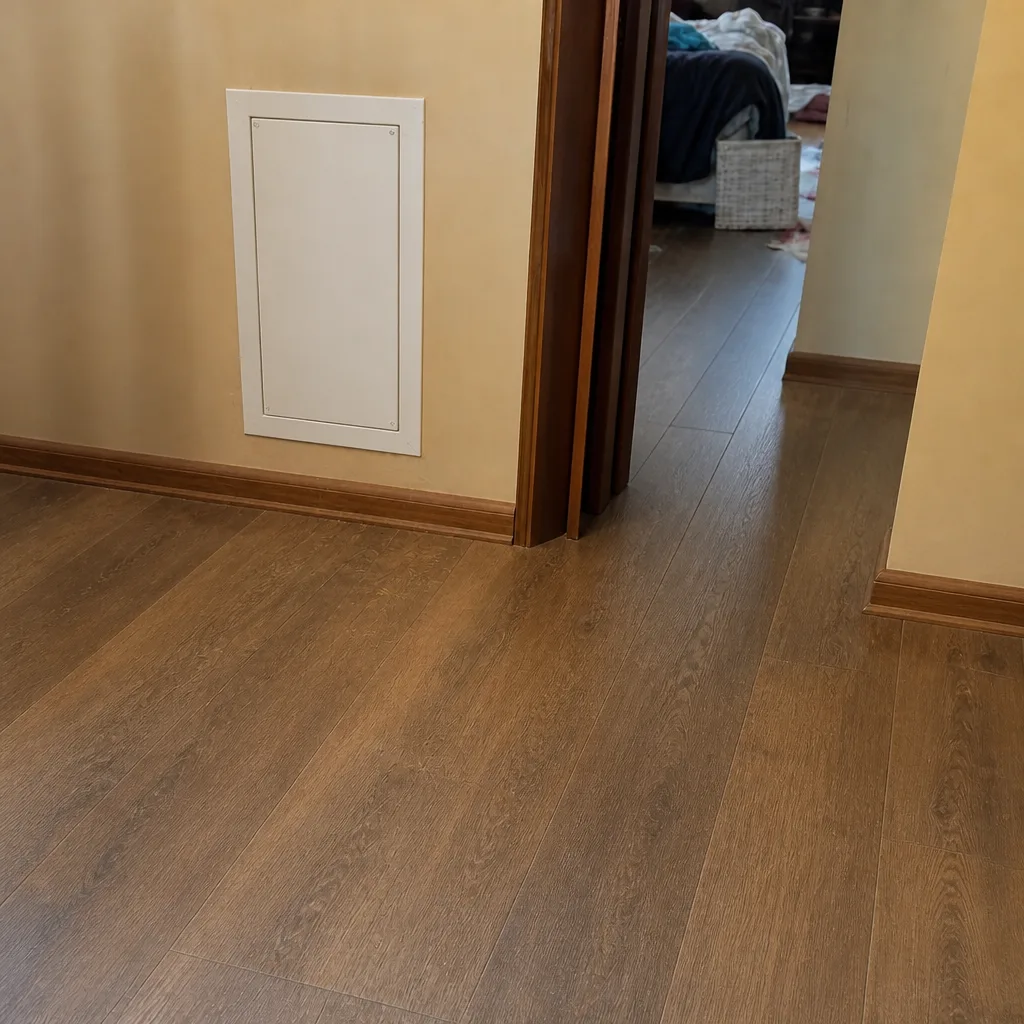 After
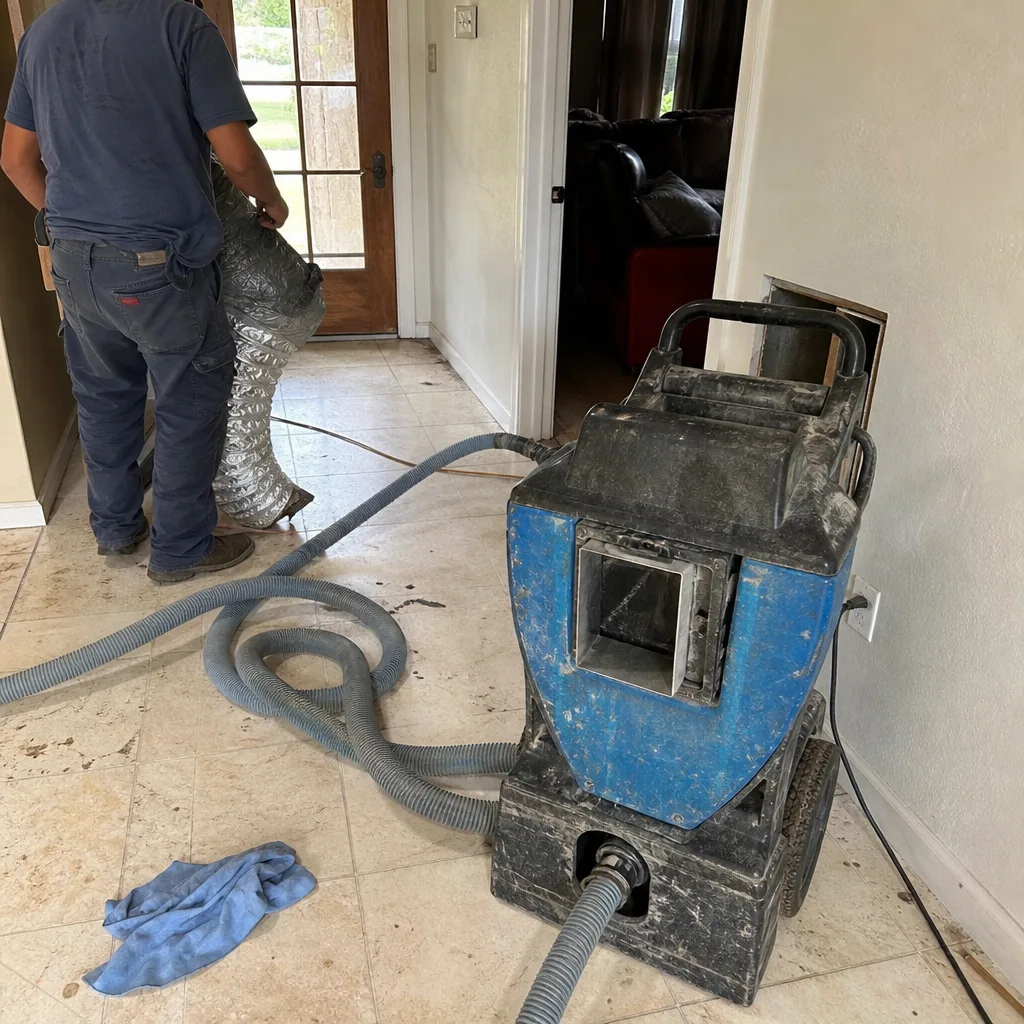 Before
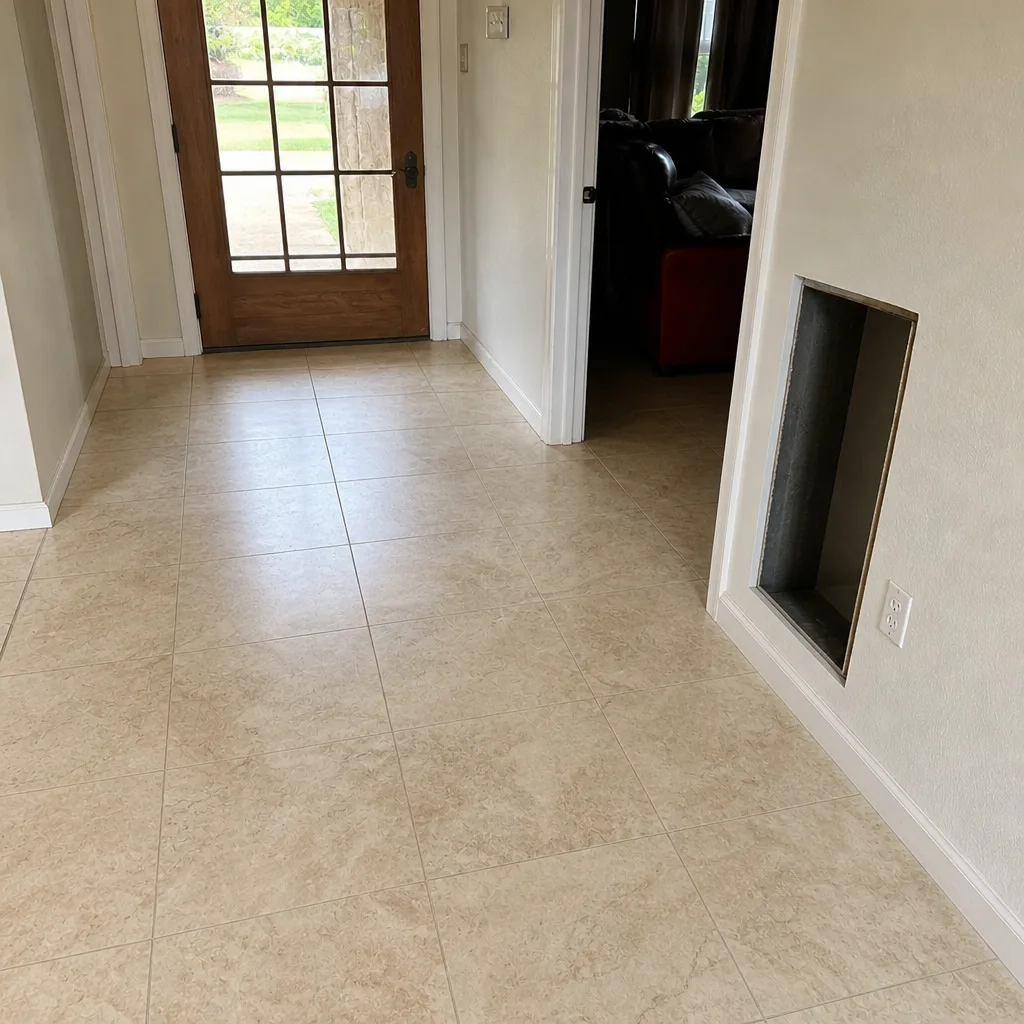 After
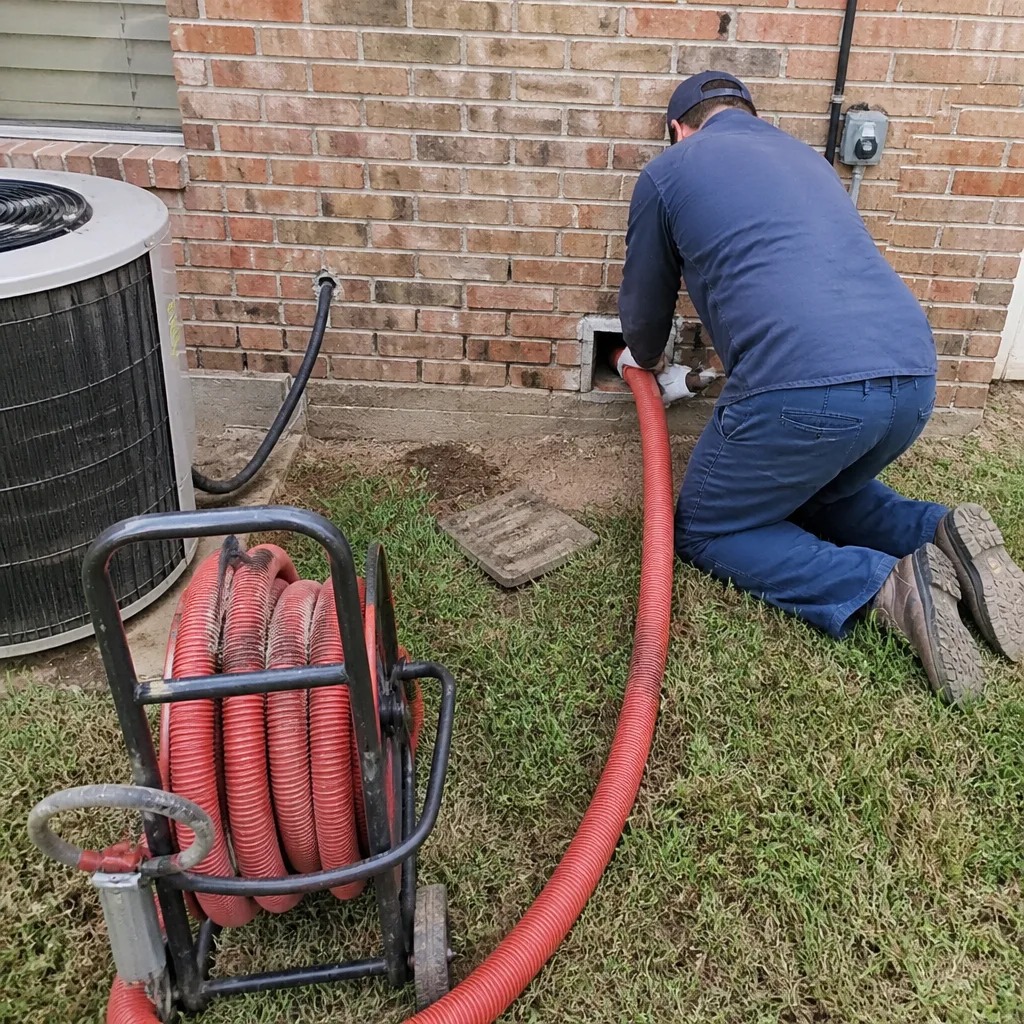 Before
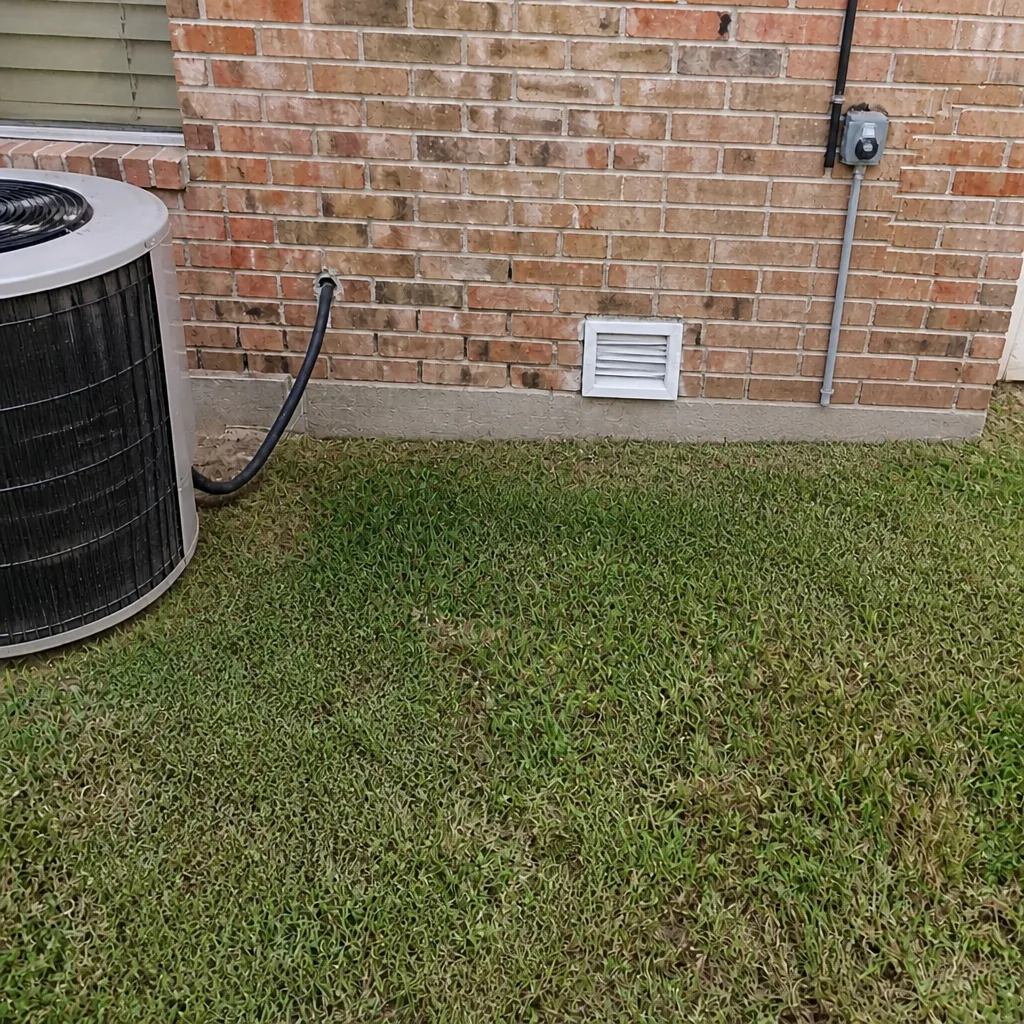 After
When to Call a Professional
Call a professional if the water reached the duct system, if the home had a fire or heavy smoke, if storm debris breached the roofline or an exterior wall, or if the system ran while the house was wet or smoky. Call if you smell smoke or mustiness at the registers weeks after an event. Call if you had a cleaning and the smell came back. Call if airflow to one side of the house is weak and the other side is fine, since that pattern usually means a duct has come apart somewhere in the attic. And call if a contractor has already cleaned the ducts but nobody has inspected the sealing, because clean ducts that leak will just re-contaminate.
Safety first: if water reached the air handler or any electrical component, leave the power off and have an electrician or your utility clear the equipment before anyone touches it. Duct and HVAC work involves electrical connections, gas lines at the furnace, and attic access – all jobs for a trained professional, not a weekend project. For a full picture of what professional service covers, our air duct cleaning page walks through the process end to end, and HVAC cleaning covers the equipment side of the system. Pleasant Grove Air Duct Cleaning offers free estimates in Pleasant Grove – call (855) 658-5117. We answer 24/7. Fast dispatch from 7am to 7pm, Sunday through Friday.
Frequently Asked Questions
No – leave the HVAC system off until the duct system has been professionally inspected. Running a wet or contaminated system pushes moisture, pathogens, and debris into every room within hours, and it doesn’t actually dry ductwork effectively. Get the system inspected first, then decide. Call (855) 658-5117 for an exact quote – estimates are free.
Most professional residential duct cleanings in the Pleasant Grove market run roughly a few hundred dollars for a standard home, with the exact price set by the written estimate based on system size, duct type, and accessibility. Post-event cleanings that involve negative-pressure containment, antimicrobial treatment, or duct repair sit above that range. We give one flat price per system agreed before work starts – no per-vent pricing. Call (855) 658-5117 for an exact quote.
Cheap quotes usually mean a single-pass surface cleaning without negative-pressure equipment, without insulation assessment, and without antimicrobial treatment – which is exactly what a post-event situation requires. On a smoke or flood job, that’s not a smaller version of the same service; it’s a different job that misses the contamination. A trustworthy quote lists the equipment and the steps. Call (855) 658-5117 and we’ll walk you through what’s included.
Ask for before-and-after photos of your own ducts and a written report. Any reputable technician will photograph access points and duct runs before and after, and we show you what we find before we start. On a claim-related job, the inspection report and the photos are also what your insurer needs. Call (855) 658-5117 to schedule.
The most common reason is that the cleaning didn’t reach the duct insulation, where smoke deposits embed and release odor slowly long after the visible surfaces are clean. The other possibility is a contamination source outside the duct system – charred framing, wall insulation, or contents that were never treated. Either way, the return of odor is a sign to have the system re-inspected rather than cleaned again blindly. Call (855) 658-5117 for a free estimate.
Yes. Attic duct runs are the vulnerable part. A displaced roof section, shifted vent, or wind-blown debris can separate a flex run from its boot or crush it – and the house will look entirely normal from below. The tell is weak airflow at the registers on one side and normal airflow on the other. That pattern is worth inspecting. Call (855) 658-5117 to schedule one.
For most Pleasant Grove homes, a professional cleaning every few years is reasonable, and sooner if someone in the house has allergies, the home is new to you, or a renovation just finished. After a flood, fire, or major storm, it’s not a scheduling question – it’s a post-event assessment, and it happens before the HVAC runs again. Call (855) 658-5117 for an exact quote.
The Bottom Line
After an event, the sequence is what protects you: shut down the HVAC, document everything, then inspect before you clean. Contamination in a duct system doesn’t stay in the duct system – it goes into the living space the moment the blower runs, and a remediation that skips the ducts will be undone the first hot afternoon the AC comes back on. Water and flex duct rarely end well. Smoke hides in insulation. Storm damage hides in the attic. Insurance claims are won with photos and reports gathered before anything was touched. For Pleasant Grove homeowners, the goal isn’t to buy the biggest cleaning after the worst week – it’s to know the right steps before the week arrives, and to have the ducts inspected and sealed before they hide the next problem. Pleasant Grove Air Duct Cleaning offers free estimates – call (855) 658-5117. We answer 24/7. Fast dispatch from 7am to 7pm, Sunday through Friday.
Written by the team at Pleasant Grove Air Duct Cleaning.